
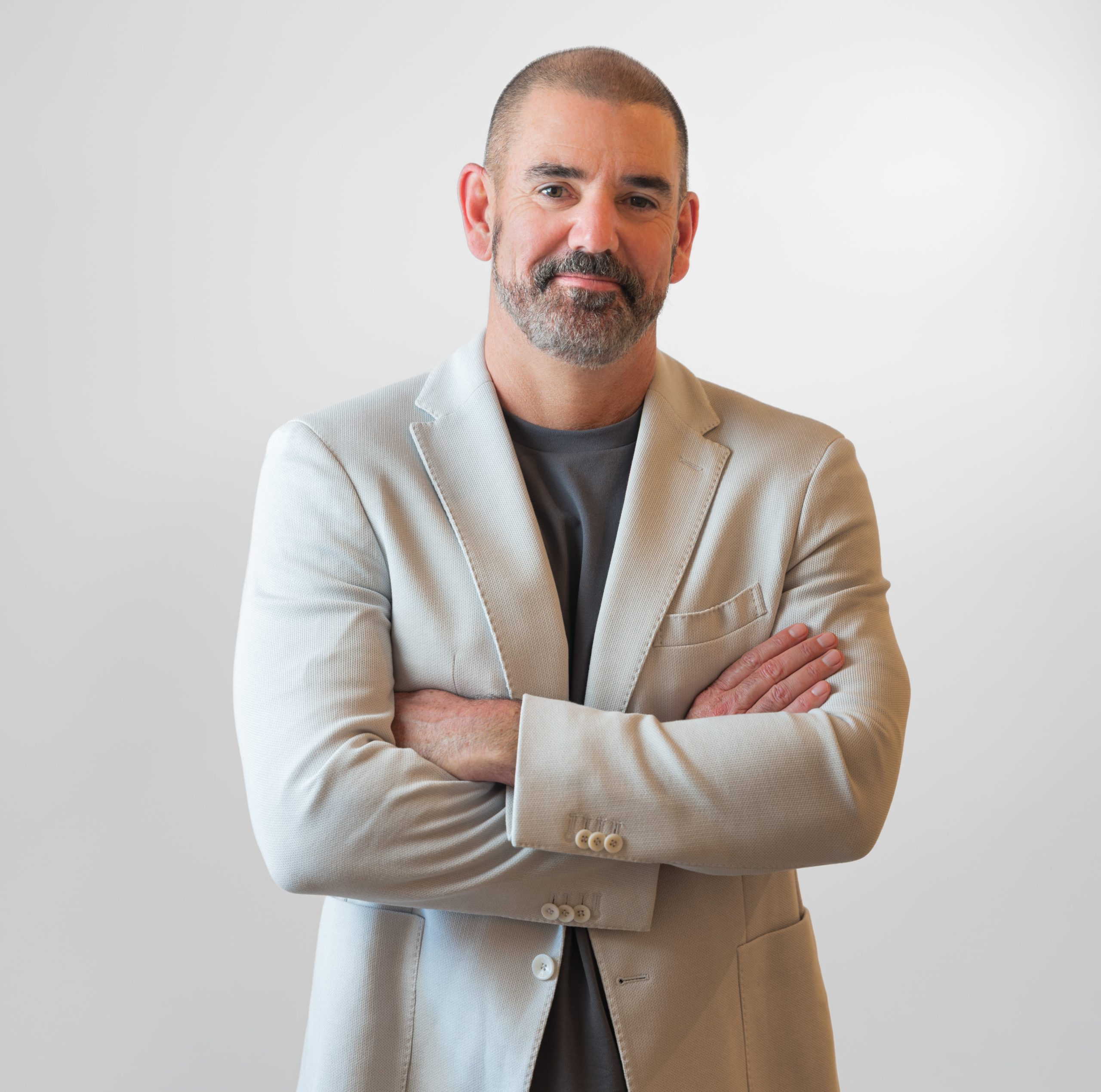
El magnate tecnológico convertido en propietario de bodegas Hayes Drumwright comparte lecciones sobre IA, vida y vino tras su tercer diagnóstico de cáncer. Sarah Neish informa.
“Getting diagnosed is brutal. There really isn’t another way to view it,” says Hayes Drumwright. However, he insists, each of the three times he has faced cancer, “I have been given a gift.”
The serial entrepreneur, who co-owns three Napa wineries and has founded a raft of successful tech businesses (one of which sold last year for a rumoured US$1.65 billion), believes that cancer forged his laser focus. “Each diagnosis snaps you immediately back to attention. It almost feels like being teleported somewhere to become a spectator to the life you have built,” he tells the drinks business.
Noticias que cambian la vida
The first time Drumwright heard the life-altering news, in 1993, he was 20 years old and at college. The next five years flew by in a whirlwind of tests and treatment before he was eventually given the all-clear.
“That scare taught me to never wait around, leading me to take some pretty big professional leaps in my 20s, and fail often, confident that as long as I had my health, I could bounce back,” he says.
One of these failures saw Drumwright start his first company, Techfuel, at 25 years old, only to “lose everything” when it failed four years later in the dot-com bust.
Fast-forward another year, and in 2002 he branched out again, this time launching tech consultancy Trace3, which helped companies to adopt emerging technologies coming out of Silicon Valley. To give an idea of the ascent of that business, Drumwright sold his majority stake in the company in 2017, remaining a significant shareholder, and last November Trace3 was acquired by Apollo Global Management, with its 2025 revenue predicted to total US$3bn. Drumwright remains on the board of directors for Trace3, which is now a leading specialist in AI, data, cloud and cyber security.
Diferente campo
Against that backdrop of coding and caches, and as AI began to creep into almost every crevice of daily life, Drumwright chose to venture into a different field, one rooted in the land. He had always had “a very romantic impression of both wine and the classic regions that produce it”, he says, having fallen in love with “the slower pace… and the entire culture around wine” during a visit to Tuscany. This new-found passion led him to team up with two childhood friends in his 30s to start a Napa wine label “and to spend more time together.”
“After beating cancer the first time around, I viewed the rest of my life as borrowed time. As life gets busy, you can drift from remembering how special that borrowed time is and how much it should be cherished,” he says.
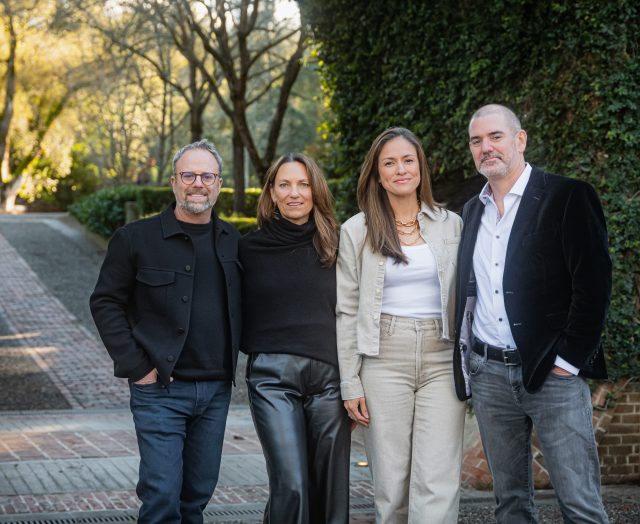
The trio of owners – Drumwright, Adriel Lares and Adam Craun – established their winery in Calistoga, Napa Valley, and named it Memento Mori, which roughly translates as ‘remember your mortality’. But, as Drumwright recalls: “Adriel suggested we build the brand around the more uplifting mantra ‘Remember to Live’.”
Their first vintage release was 2010 and, according to Drumwright “collectors craved that real connection beyond standard wine spiel.” In fact, they would bring Momento Mori bottles to dinners “to retell our story alongside their own health scares and triumphs, turning our brand into an incredible community.”
Combustible en el fuego
Fully engrossed in the wine world, Drumwright was shocked to receive a second cancer diagnosis in 2019, but again found fuel in the fire, the experience prompting him to expand his empire by acquiring a second winery with Memento Mori winemaker Sam Kaplan and his wife Nancy in 2021. This time the estate was in St Helena. They called it Vida Valiente (valiant life).
Drumwright’s wife Susana, also a co-owner, is central to that business’s philosophy, given that Vida Valiente donates US$100 from every bottle sold of its flagship Cabernet Sauvignon blend, The Movement (RRP: US$250) directly to her foundation, which provides scholarships to Stanford University for first-generation, low-income applicants.
“Students from these backgrounds had to overcome incredible hurdles to get themselves into Stanford – most without any support – and we see them as the rising stars and empathetic future leaders most worth betting on,” explains Drumwright. “Seeing our very first cohort of these exceptional young adults graduate this year was an unforgettable milestone for us.”
Triplete
With the wine-producing bit firmly between his teeth, Drumwright scored a hat-trick when, in March 2026, he and a group of 20 private investors snapped up the historic Edge Hill wine estate in St Helena for US$21.5 million. He describes the experience as “deeply emotional”, not least because he had learned he had cancer for the third time only a month before the paperwork for his third winery was signed.
“Stepping onto the Edge Hill estate felt like walking back in time, complete with original 1800s stonework on the site of the 209th distillery ever approved in the US,” Drumwright explains. “We named the wine label Ultra Mortem (beyond death), inspired by a licensed cemetery that its previous owner, Leslie Rudd, had placed on the back of the property. Though it was never used, the cemetery serves as a daily reminder on our walks to keep building something meaningful.”
“Incentivo renovado”
This ability to turn melancholy into motivation is arguably Drumwright’s biggest skill – something he has deployed many times while juggling a full-throttle career with a revolving door of health issues.
Each time the cancer returns, “there is intense worry for those you care for. You worry about leaving too soon and not being there to support and love your children. You worry about your wife and how your leaving would crush both your dreams. It is unimaginably hard”, he says. “But I have also had the renewed incentive to tell those close to me what they mean to me; to be present in my conversations; to plan and to make sure that, in the worst-case scenario, the path forward for my family, businesses and scholars will be secure.”
The disease has also had an unavoidable impact on his work colleagues, but as Drumwright points out: “I don’t have any business partners who aren’t close friends.”
He believes “pretty firmly” that supporting someone with cancer “is much harder on loved ones than it is on the patient. They have to try to stay positive, and pretend to be strong. That is so lonely and so scary. I tried to stay very cognisant of that and to create space for them to not have to be strong all the time, but I know it is hard”.
Amor por el vino
Over the last 16 years of being in Napa Valley, Drumwright says that his love affair with wine “has only deepened”. But in what ways has he seen the region change?
“Like any industry, wine has cycles of contraction and expansion,” he replies. “There has been a great deal of consolidation in Napa Valley over the years, and yet there are still new brands launching, especially smaller family brands, which I always love to see.”
Politics, both national and international, “play a massive role in what we do, even if most wine collectors just think about what’s in the glass”, he adds. “Trade disputes and shifting tariffs are always top of mind, while local policies directly impact how we farm every day in Napa. Fine wine has always been a bit of soft diplomacy – it represents our region on the world stage, no matter what’s going on in the news.”
As the wine trade lowers its head and pushes through some of these gale-force winds, Drumwright feels a keen sense of responsibility towards his employees. “We have been growing all our brands through this difficult time,” he says. “While many wineries are laying off people, or sadly even shutting down, we have been hiring. We also have construction projects under way at all three sites, which helps support and lift the local economy.”
Peligros micro y macro
He knows all too well how it feels to make tough decisions to stay afloat. “I have started companies that failed. I have had to lay off people I loved during those failures. It is one of the worst feelings in the world,” he says.
“I learned through those experiences that, when people lean on you as a leader, you must be vigilant about both micro and macro dangers to your business. You have to keep your head above the trees and set a clear path, with multiple back-up plans, to make sure that when things do not go well, your company and teams will not only survive, but hopefully be able to help those who are struggling.”
Drumwright stresses that “there is no compromising or skimping” on the quality of the wine his companies produce. “But in every business I have run, I believe the people running the business are the true product. There is a lot of great wine out there, but assembling a great team is what creates the unique culture around our wines. It takes the right people to understand the ‘why’ of our business and to realise that they are the most important factor”.
Fórmula secreta
The secret formula to building a successful winery (or three), he says, is “incredible vineyard sites, an incredible winemaker and people who 100% buy into what you are trying to create”.
What about the personal attributes required to ‘make it’ as a winery owner during these challenging times? Surely a titanium disposition and unstoppable work ethic are helpful?
“My one rule, which doesn’t have to work for anyone else, is this: would I want to be part of what is being built if I wasn’t running it?” he says. “Does it inspire something in me? If the answer is yes, then I hope it inspires others too.”
As with all visionaries, they rarely have an ‘off’ button, and in August Drumwright embarked on yet another project, this time combining his two loves – technology and wine. He began writing The Empty Center, which he describes as “an unusual memoir” just days after his most recent cancer surgery, and he did so in partnership with AI collaborator Claude in a bid to explore “what it means to create alongside AI”.
It was, he tells db, a way of engaging with the uncertainty he was feeling.
Drumwright explains that the copy is not 100% AI-generated. Instead, it reads as “a philosophical conversation” between him and Claude. “The way it was made is the reason to read it. I wrote 13 chapters, Claude wrote three, and then we wrote three together, with each of our words explicitly attributed to the author. I am not sure this has ever been done before.”
Instead of trying to predict whether AI is friend or foe, “the book asks a question you can actually do something with”, Drumwright explains. “When the future refuses to hold still, what will you build, and who will you become? That question works, whether AI turns out to be something wonderful or terrible for the world, or both at once.”
Manual de la incertidumbre
Above all, The Empty Center is a manual on how to deal with uncertainty in life, regardless of whether the cause of that uncertainty is “a tumour or a technology”, he says.
Imagining who might pick up the book, Drumwright adds that it is aimed at someone who is “lying awake doing the math on a future they can’t control, who is wondering what to tell their kids about their future career options, whose industry is shifting, or anyone who is tired of being told to either panic or celebrate. The book won’t tell you what’s coming, but it will help you decide who you are going to be when it gets here.”
The publication of The Empty Center also coincides with the launch of Los Padrinos, a new members club at Vida Valiente, linked to the scholarship foundation that Drumwright’s wineries donate funds to. “As we have shared the students’ triumphs with our wine collectors, those clients have wanted to know how they can help,” he says. “We make sure that Los Padrinos, or ‘The Godparents’, get at least three bottles of all five wines that Vida Valiente produces, and they get quarterly updates on how our scholars are changing the world.”
When asked what kind of legacy he would like to leave behind, Drumwright takes stock.
“I want to be remembered as someone who invested in creating special entities that lift others, because I believe that the people you lift go on to lift other people you will never meet,” he says. “As for the wineries, their legacy is already written into their names. Put the three together and you have the whole thing: remember to live a valiant life worthy of remembering.”
The Empty Center is available now on Amazon, priced at US$14.99 (paperback) or US$7.99 (ebook).